The Rise of PPF in the Middle East: Catering to Extreme Climate Demands
The Middle East represents one of the most dynamic and demanding markets for the automotive aftermarket industry. Here, the combination of a booming luxury and SUV segment, a culture that prizes impeccable vehicle appearance, and an exceptionally harsh climate has created the perfect storm for the rapid adoption of Paint Protection Film (PPF). For distributors and installers, understanding this unique landscape is key to unlocking significant growth. At ELOV PPF factory(https://www.elovppf.com/), we have engineered our PPF technology not just to survive but to excel under the extreme conditions that define the region.
A Market Primed for PPF Growth
Several factors converge to make the Middle East a PPF powerhouse:
-
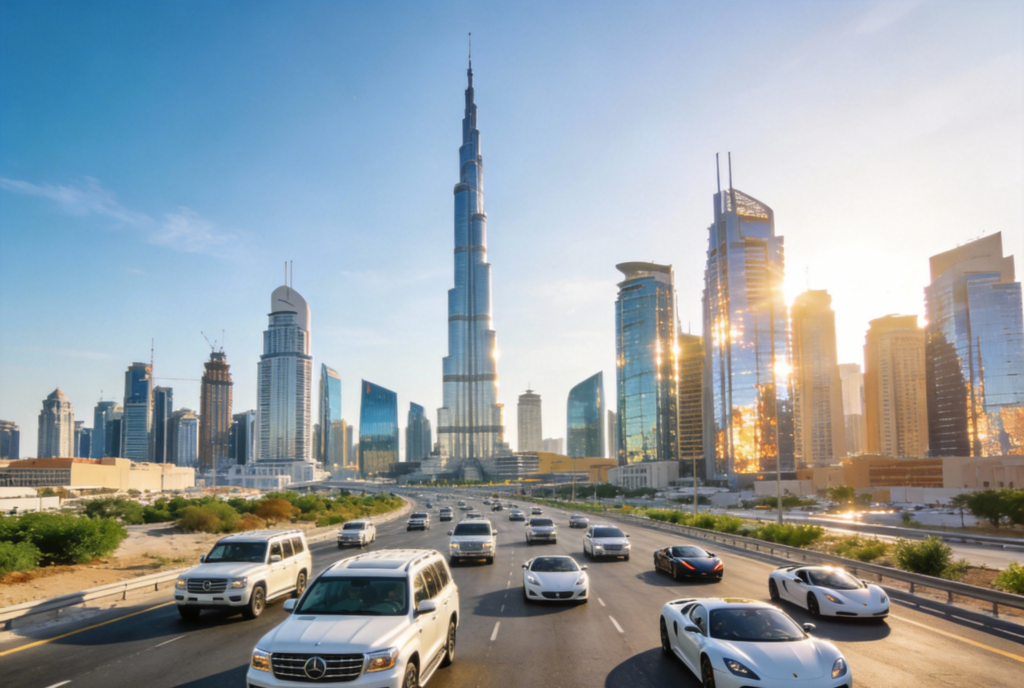
Vehicle Culture: High per-capita ownership of luxury vehicles, premium SUVs, and supercars, where owners invest heavily in maintenance and aesthetics.
-
Environmental Aggressors: Vehicles face relentless sun, extreme heat, sand and dust storms, high humidity in coastal areas, and occasional abrasive desert winds.
-
Economic Drivers: PPF is seen as a necessary investment to protect high-value automotive assets, preserving resale value—a crucial consideration in a strong resale market.
The Extreme Climate Challenge: Beyond Basic Protection
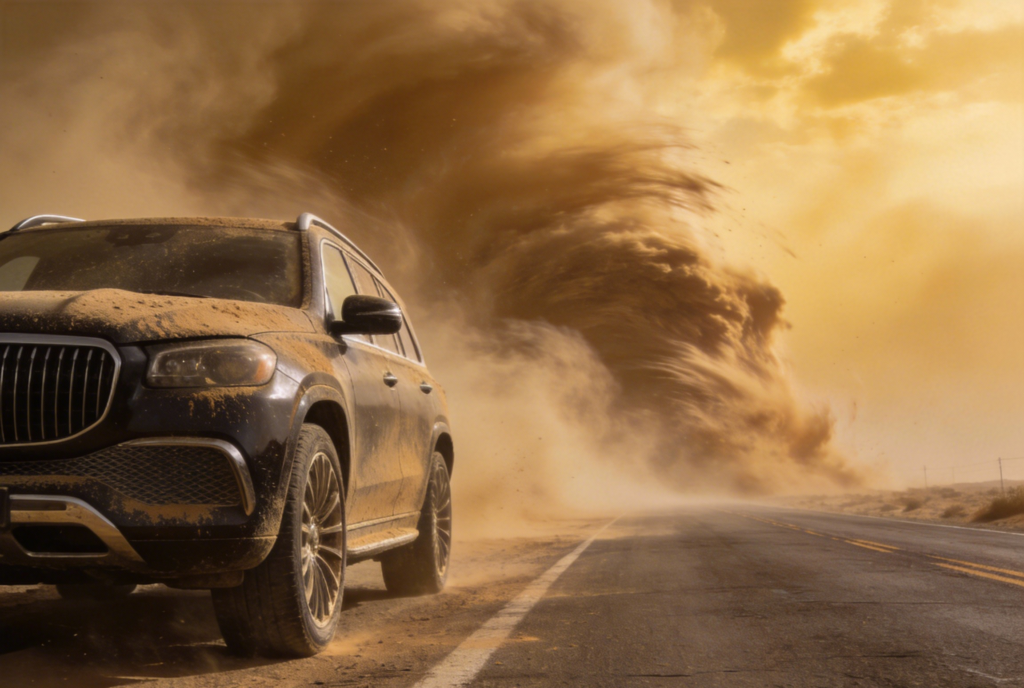
The Middle East doesn’t just test a vehicle’s paint; it stress-tests the very limits of PPF technology. Common failures of inadequate film in this region include:
-
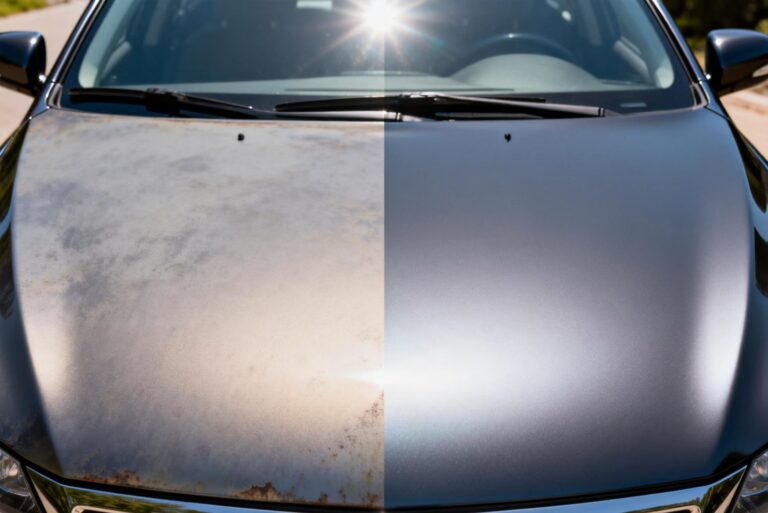
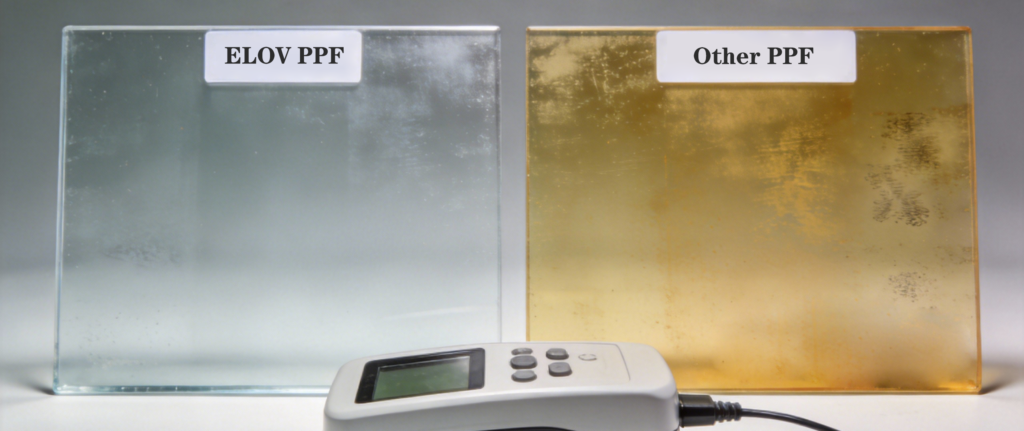
Rapid, Severe Yellowing: Under intense, year-round UV radiation, inferior films (especially those using aromatic TPU) can oxidize and yellow in a matter of months, becoming visually unacceptable.
-
Coating Breakdown and Hazing: Extreme surface heat can cause poor-quality top coats to degrade, losing their hydrophobic properties and becoming hazy or sticky, trapping sand and dust.
-
Adhesive Failure and Edge Lifting: The cycle of searing daytime heat and cooler nights, combined with thermal expansion of vehicle panels, can cause weak adhesives to ooze, release, or allow edges to lift, inviting dirt and failure.
-
Sand Abrasion and Scratches: Airborne sand particles act like fine-grit sandpaper, constantly scouring a film’s surface, overwhelming the self-healing capabilities of lower-grade products.
The ELOV Engineering Response: Built for the Desert Sun
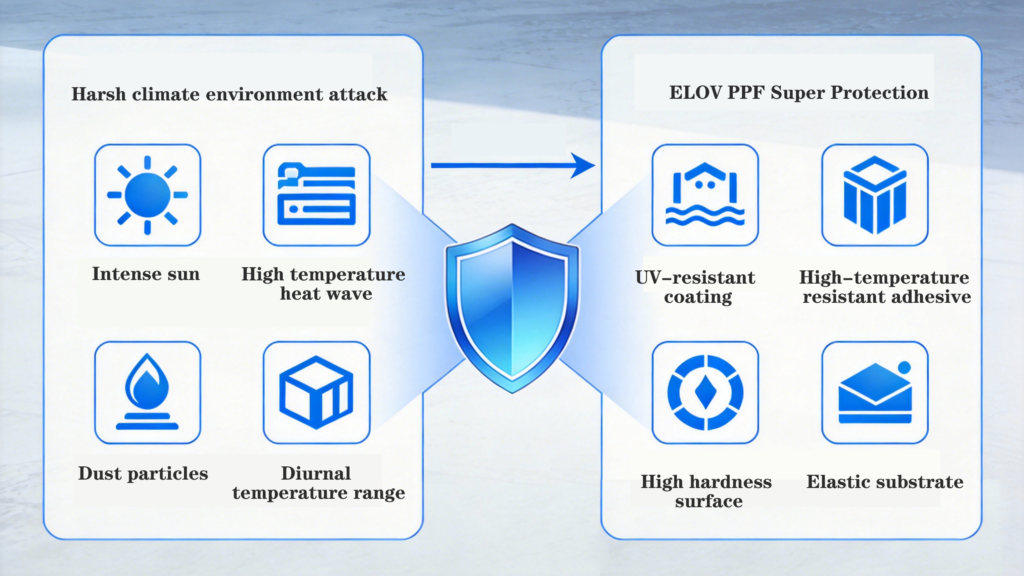
At ELOV, we view the Middle Eastern climate not as an obstacle, but as our core design criterion. Our PPF is built on a foundation of targeted technologies:
1. Ultimate UV & Thermal Resistance
Our films are exclusively based on 100% aliphatic (fatty) TPU. Unlike aromatic TPU, this base material is inherently resistant to UV-induced yellowing. We couple this with a high-density, UV-absorbing top coat stabilized with advanced hindered amine light stabilizers (HALS). This system acts as a non-depleting sunscreen, ensuring the film remains crystal clear and stable for years, not months.
2. Enhanced Thermal Stability & Adhesive Integrity
ELOV’s pressure-sensitive adhesive (PSA) is formulated for high-temperature performance. It maintains strong, stable bonding across a vast temperature range without degrading, oozing, or leaving residue. This ensures full, secure adhesion even on large panels exposed to direct desert sun, preventing edge lift.
3. Superior Surface Hardness & Anti-Contamination
We engineer our top coat for exceptional surface hardness and chemical resistance. This creates a harder, more durable barrier against fine sand abrasion and makes the film more resistant to etching from airborne contaminants. The surface is also optimized for easy release of dust and sand during washing.
4. Robust Self-Healing for a Harsh Environment
Recognizing the constant micro-scratches from sand, our proprietary self-healing technology is calibrated for reliable performance in the region’s typical heat. Minor abrasions and swirl marks disappear efficiently, often using just the ambient solar heat, keeping the vehicle looking showroom-fresh with minimal intervention.
Positioning for Success: A Guide for Distributors
Entering or expanding in the Middle Eastern PPF market requires a strategic approach:
-
Educate on Quality: Move the conversation beyond price per square meter. Educate clients on the Total Cost of Ownership—cheap film that fails in one year is far more expensive than premium film that protects for five.
-
Showcase Extreme Testing: Use data from QUV Accelerated Weathering Tests and thermal cycling tests to demonstrate superiority. Visual evidence of performance under duress is a powerful sales tool.
-
Target Key Segments: Focus on luxury car dealerships, high-end detail centers, and enthusiast clubs. These clients understand value and are willing to invest in proven protection.
-
Provide Climate-Specific Marketing: Supply your installers with marketing materials that directly address regional challenges—videos and blogs about UV protection, sandstorm resilience, and heat resistance.
Conclusion: A Partnership for Harsh Climates
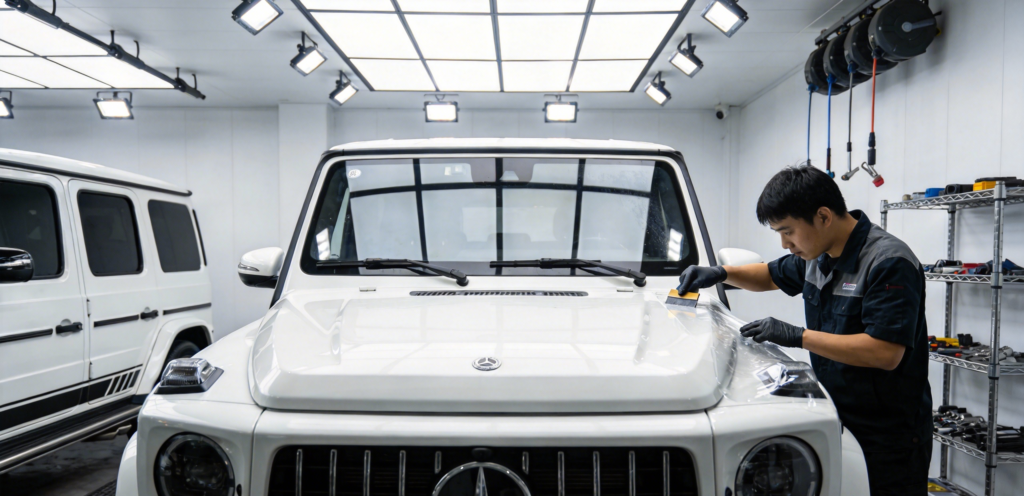
The rise of PPF in the Middle East is a direct response to a clear and pressing need. It is a market that rewards performance and punishes compromise. ELOV does not offer a generic global product; we provide a climate-engineered solution designed to deliver flawless protection and aesthetics where it matters most.
By partnering with ELOV PPF factory(https://www.elovppf.com/), you equip your business with a product that instills confidence, minimizes costly comebacks, and allows you to confidently promise—and deliver—long-lasting protection to the most discerning customers in one of the world’s most challenging environments.
Conquer the toughest climate with the toughest protection.
Contact ELOV PPF factory today to discuss our specialized Middle East PPF portfolio, request performance data, and explore distribution opportunities tailored for your region.