How to Read a PPF Test Report
A PPF test report is useful only when you can connect its results to the film you are buying. A high elongation figure, a low haze value or a photograph of laboratory equipment cannot answer that question alone. Wholesale buyers need to know which sample was tested, how it was prepared and what the result actually measures.
This guide explains how to read a paint protection film test report before approving a supplier or changing a product specification. Use it alongside ELOV’s factory QC checklist: the checklist reviews production controls, while this article focuses on the evidence behind individual test results.
1. Identify the document and the sample
Start with the report number, issuing laboratory, test date, customer name and sample description. Then match the description to your quotation: model code, film construction, finish and batch reference. A report for an uncoated TPU substrate is not automatically evidence for the finished adhesive-coated PPF roll.
Keep three documents separate. A technical data sheet summarizes a product’s stated properties. A test report records results for identified specimens under stated conditions. A company management-system certificate addresses a different scope. None should be presented as a substitute for the others.
If the document identifies a different model, ask the supplier to explain the relationship in writing. Do not silently rename the tested sample in your distributor catalog. ELOV’s batch traceability guide explains how order and roll records can support this connection.
2. Check what the thickness includes
Before comparing thickness, establish whether the figure refers to TPU alone, the installed film including adhesive and coating, or the supplied stack with removable protective layers. A release liner contributes to the stack measurement but does not remain on the vehicle. Two different measurement boundaries can produce apparently conflicting numbers without describing the same property.
Confirm the unit, nominal value, permitted tolerance and measurement locations. One mil equals 25.4 micrometers; rounding a conversion is not a manufacturing tolerance. Ask whether the report shows one reading, an average or a range across multiple specimens. Keep this definition consistent when comparing the clear PPF range and individual models such as PPF-C01.
3. Read the method before ranking the result
Tensile strength and elongation
Tensile strength, elongation at break and tear resistance are not interchangeable labels. Check the reported property, unit, specimen direction, thickness, test speed and conditioning. A percentage describing extension at break is not an instruction for how far an installer should stretch film on a bumper.
The official ASTM D882 overview notes that tensile results depend on factors including specimen preparation, thickness, test speed and grips. This is a useful reason to compare test setups before comparing numbers. It does not establish that any particular ELOV model was tested to that standard; the model’s actual report must identify its method and revision.
Haze, transmission and surface finish
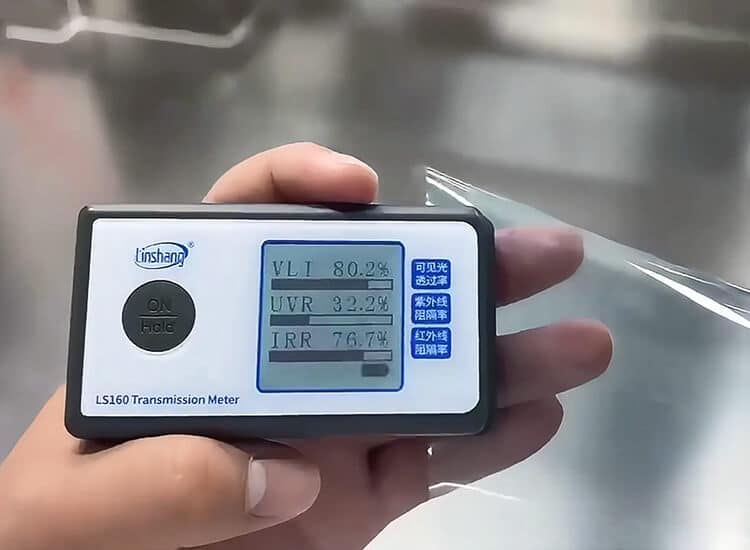
For transparent film, haze and luminous transmission describe different optical characteristics. The ASTM D1003 overview covers these measurements and distinguishes instrument procedures. Ask which procedure and sample preparation were used. A gloss reading alone is not a transparency result, and a matte finish should not be judged against a glossy product’s appearance target.
Adhesion and surface recovery
For peel testing, record the substrate, specimen width, angle, speed and dwell time. Compare results in matching units and under matching conditions. For scratch-recovery demonstrations, request the preparation method, recovery conditions, elapsed time and inspection criteria. A short edited video cannot replace those details, and a reported recovery result is not a promise to repair cuts or every type of damage.
4. Separate an observation from a guarantee
Ask whether the value is a typical specification, a measured result or an agreed acceptance limit. A report showing several individual readings gives a different picture from a catalog showing one headline number. Where available, review the specimen count, variation and any stated uncertainty or limitations.
Keep accelerated exposure hours separate from a commercial warranty. Do not convert a laboratory exposure duration into years of outdoor service unless a relevant, documented correlation supports that interpretation. For purchasing, request the current written warranty separately, including covered issues, exclusions, starting date and claim evidence. This avoids turning a test condition into an unsupported sales promise.
5. Build a one-page evidence record
For each shortlisted model, maintain a short record with these fields:
- Identity: supplier model, your local SKU, finish and sample or batch reference.
- Document: report number, issuer, date, revision and complete file.
- Method: property, standard or internal procedure, units and test conditions.
- Decision: agreed acceptance criteria, observed result and unresolved questions.
- Follow-up: responsible person, clarification date and sample approval status.
Mark missing evidence as pending instead of filling gaps with assumptions. If a report and quotation disagree, pause that part of approval until the supplier resolves it. For private-label PPF packaging, carry the approved model identity into box artwork, inner-bag labels and backing-logo records so marketing names do not break traceability.
6. Connect the report to sample approval
A laboratory document and installer feedback answer different questions. After reviewing the evidence, arrange a representative sample evaluation using the supplier’s current instructions. Record handling, appearance and edge results without inventing universal application temperatures or chemical recipes. Use the PPF sample testing guide to organize that review.
To request supporting information from ELOV, send the model codes, destination market, intended use, sample quantity and specific report questions through Contact ELOV PPF. Sample MOQ is one roll; standard Clear and Matte PPF orders start at 20 rolls, Color PPF at 10 rolls, and OEM or private-label orders at 100 rolls. Confirm the proposed model mix and current order terms before payment.
PPF Test Report FAQ
Is a technical data sheet the same as a test report?
No. A data sheet summarizes stated product properties. A test report should identify the tested specimen, method, conditions and results. Ask for the document that supports the particular claim you need to assess.
Can I compare results from different test methods?
Not as a direct like-for-like ranking without establishing comparability. First align the measured property, sample preparation, units and conditions, or ask a qualified laboratory how the methods relate.
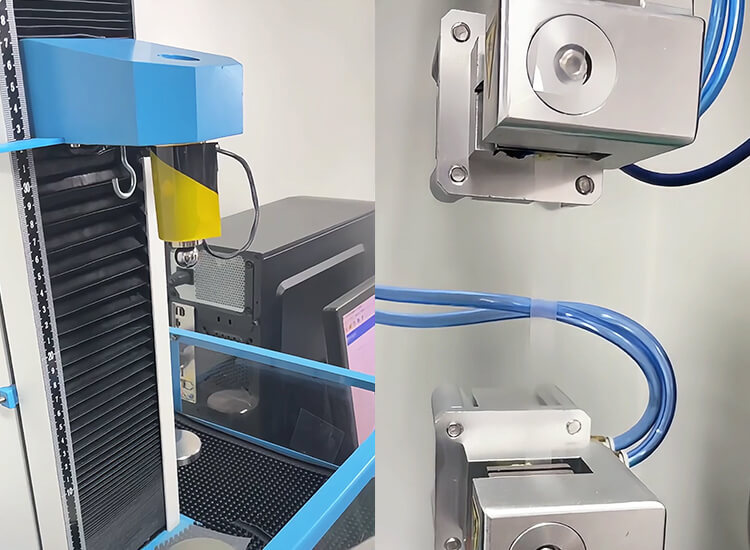
Does a laboratory photo prove a product passed?
No. It illustrates equipment or a testing activity. A pass decision requires identified specimens, recorded results and relevant acceptance criteria; the photograph alone does not provide them.
What should I do when a report has missing details?
List the gaps, request clarification and keep approval pending for those claims. Retain the supplier’s response with your sample and order records rather than guessing a specification.