PPF Roll Inventory Tracking: A Guide for Shops and Distributors
PPF roll inventory tracking helps a distributor or installation shop answer a practical question: which film is actually available for the next job? Counting cartons is not enough when some rolls are reserved, opened, damaged or partly used. A simple roll-level ledger can separate usable stock from stock that only appears available.
This guide focuses on day-to-day movements, not demand forecasting. Use it alongside your purchasing plan to connect the warehouse, cutting area and sales team without promising customers material that cannot cover their panels.
Give every physical roll its own identity
A product code identifies a model, not an individual roll. Create a unique internal roll ID when goods arrive, while retaining the supplier’s original batch label. Two cartons of the same clear film should have separate records because they may be opened on different dates or assigned to different customers.
Keep the supplier batch reference unchanged. Your internal ID can be short, such as WH-0042, but it should link to the purchase order and receiving record. For additional documentation, follow the PPF batch traceability guide.
Minimum fields for a practical ledger
- Internal roll ID, supplier model and batch reference.
- Finish, color code, nominal width and original length.
- Measured or estimated remaining length, with the measurement date.
- Warehouse location, date received and date first opened.
- Status: available, reserved, in use, inspection hold or exhausted.
- Job reference, operator and reason for the latest adjustment.
Label estimates clearly. Do not present a remaining-length estimate as a guaranteed cutting allowance. Record the supplier’s storage instructions separately and retain the original packaging identification.
Separate product variants before counting stock
Group reports by the exact model and finish. Matte black and glossy black are different stock items even when they belong to the same color family. A salesperson should not substitute one for the other based on a generic description such as black PPF.
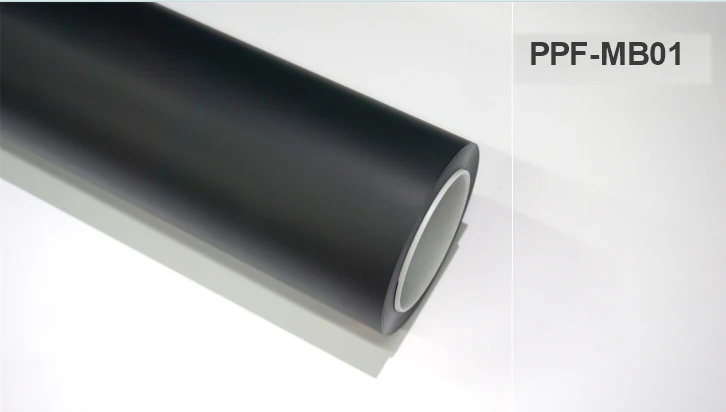
Use the Color PPF collection to build your model list, and maintain separate records for Clear PPF models. Product photos support identification, but the supplier label and approved specification should control the record.
Track each movement at the cutting station
Update the ledger when material moves, not at the end of a busy week. The person issuing a roll records its destination and job number. After cutting, the operator records consumption and returns the roll to a named location or keeps it assigned to that job.
A worked example
Suppose a full-width roll starts with 15 meters. A job consumes 4.2 meters and a damaged leading section requires another 0.3 meters to be removed. The recorded balance is 10.5 meters, not 10.8. These are illustrative quantities, not a promised vehicle yield. Confirm dimensions and the cutting layout before allocating the balance.
Record the trim loss separately from film used on the job. Otherwise, unexplained stock differences can be mistaken for excessive installation consumption. Link repeat recuts to a reason, such as pattern adjustment, handling damage or customer scope changes.
Do not count every remnant as usable inventory
A short full-width piece and a long narrow offcut may have similar areas but serve different jobs. Give retained pieces a parent-roll reference and record usable width and length. For irregular pieces, attach a simple shape sketch or photograph with dimensions rather than relying only on square meters.
Keep material with suspected contamination or damage on inspection hold. Do not reserve it for a paid installation until someone has checked suitability. Storage conditions and acceptable reuse should follow the product instructions; a tracking spreadsheet cannot certify that an opened piece is still fit for installation.
Distinguish available stock from reserved stock
Keep physical quantity and availability as separate fields. A roll can be on the shelf but unavailable because a confirmed job has reserved it. Show reservation owner, job reference and expected release date so the sales team can resolve changes without silently reallocating material.
For color projects, preserve the batch reference when allocating several rolls. Similar product names or screen images do not establish an exact visual match. Review samples and project requirements before combining batches on one vehicle.
Reconcile the ledger before placing a repeat order
Start with a regular count of fast-moving models and opened rolls. Compare physical labels, locations and remaining quantities with the ledger. Record each discrepancy and its cause instead of overwriting the balance without explanation.
Separate unexplained loss, measured trim and normal job consumption. This makes the next order more useful: you can buy the models that are genuinely short rather than replacing material that is simply reserved or stored in the wrong location. See the distributor stock planning guide for the purchasing side.
Turn the stock record into a clear replenishment request
Send the supplier model codes, required quantities, finish, roll size and destination. Identify any need to match existing stock, but ask whether matching material is available rather than assuming it is.
ELOV’s regular-product MOQ is 20 rolls; OEM and private-label orders start at 100 rolls, while sample orders start at one roll. Mixed models are supported, subject to confirmation of the order mix and availability. Confirm sample charges and freight before ordering.
Typical preparation from payment is 1–2 working days for samples, 2–3 for stock orders, about seven for regular production, about ten for OEM packaging and about 15–20 for custom products. Confirm the applicable schedule and artwork requirements; transit and customs time are separate. Send your replenishment list through the ELOV wholesale inquiry page.
FAQ
Can a spreadsheet handle PPF roll inventory?
Yes, as a starting process. Use unique roll IDs, controlled status fields and a movement log. Assign one person to reconcile changes so multiple users do not create conflicting balances.
Should opened rolls be counted as full rolls?
No. Keep their remaining dimensions and status visible. A partly used roll should not be included in a count of unopened, full-length rolls.
Can I combine remnants to estimate full-car coverage?
Not reliably from total area alone. Panel dimensions, piece shape, finish, batch suitability and cutting layout determine whether those remnants are useful for a specific job.
Does inventory tracking replace receiving inspection?
No. Inspection establishes what arrived and whether it needs further review. Tracking records what happened afterward. Keep both records connected to the supplier batch and purchase order.